
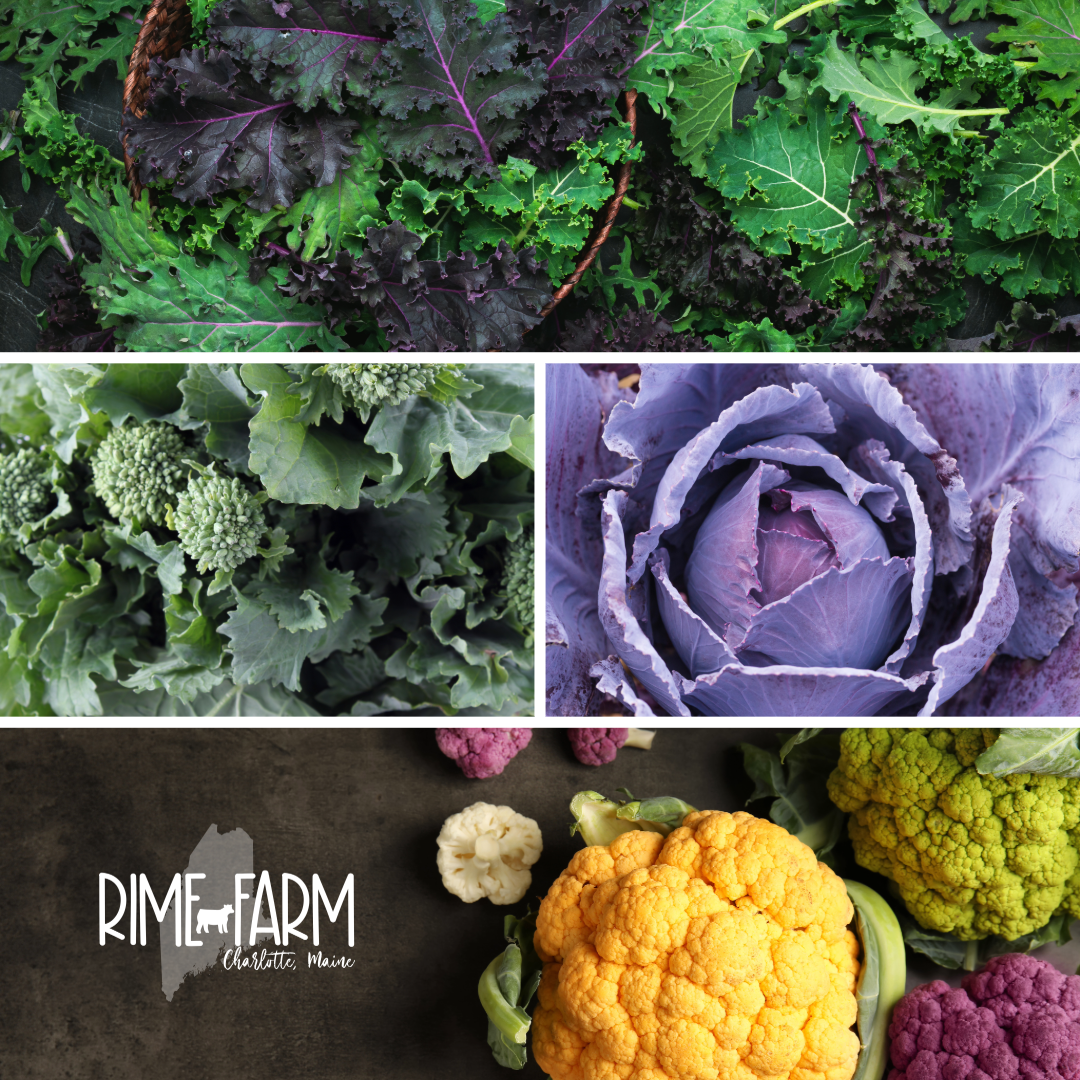
When planning an organic garden, understanding the various vegetable types like nightshades, brassicas, alliums and root vegetables is pretty important. Knowing them helps you to optimize growth, increase yield, and safeguard plant health. Each group of vegetables has unique characteristics and has different planting requirements. At Rime Farm, we love planting all types of vegetables so let’s look at the primary categories: nightshades, brassicas, legumes, alliums, and root vegetables, talk about why they’re called what they’re called and how they grow.
Nightshades

Examples: Tomatoes, Peppers, Eggplants, Potatoes
Why They’re Called Nightshades: Nightshades belong to the family Solanaceae, and many species contain alkaloids, some of which can be toxic in large quantities. The name “nightshade” is thought to derive from their ability to grow in the shade or their historical association with mysterious and sometimes dangerous properties.
Characteristics: Nightshades are warm-season crops that thrive in full sun and well-drained soil. They are known for their vibrant fruits and high nutritional value. However, they are susceptible to diseases like blight and pests like aphids and Colorado potato beetles.
Growing Tips for this Vegetable Type:
- Soil Preparation: Enrich soil with compost and organic matter. Ensuring the soil is fertile and well-aerated can significantly enhance the growth of nightshades.
- Planting: Start seeds indoors 6-8 weeks before the last frost date. Transplant after the danger of frost has passed to avoid cold damage.
- Care: Mulch to retain moisture and support with stakes or cages. Proper support helps prevent diseases by keeping the plants upright and reducing contact with the soil.
Organic Practices: Rotate nightshades every three years to prevent soil-borne diseases. Use neem oil or insecticidal soap for pest control, ensuring a healthy and chemical-free harvest. Additionally, incorporating companion plants such as basil can help deter pests and improve growth.
Brassicas

Examples: Broccoli, Cabbage, Cauliflower, Kale
Why They’re Called Brassicas: Brassicas belong to the Brassicaceae family, also known as the mustard family. The name “Brassica” is derived from the Latin word for cabbage. These plants are known for their cross-shaped (cruciferous) flowers.
Characteristics: Brassicas prefer cool weather and are often planted as early spring or fall crops. They are rich in vitamins and minerals but are prone to pests like cabbage worms and aphids, which can be a challenge for organic gardeners.
Growing Tips for this Vegetable Type:
- Soil Preparation: Work in compost and ensure good drainage. Brassicas thrive in nutrient-rich soil, which supports their rapid growth and development.
- Planting: Direct sow seeds or transplant seedlings 4-6 weeks before the last frost. Early planting ensures they mature before the summer heat.
- Care: Provide consistent moisture and use row covers to protect from pests. Regular watering helps maintain steady growth, while row covers can prevent infestations.
Organic Practices: Implement crop rotation and interplant with aromatic herbs like dill or rosemary to deter pests. Use organic BT (Bacillus thuringiensis) to control caterpillars, a common problem with brassicas. This biological control method is effective and safe for the environment.
Legumes

Examples: Peas, Beans, Lentils, Chickpeas
Why They’re Called Legumes: Legumes belong to the Fabaceae family. They are named for their ability to produce pods (legumes) that contain seeds. These plants have a unique symbiotic relationship with nitrogen-fixing bacteria, which enhances soil fertility.
Characteristics: Legumes enrich soil with nitrogen, making them excellent for crop rotation. They are valued for their protein content and can thrive in moderate temperatures and well-drained soil.
Growing Tips for this Vegetable Type:
- Soil Preparation: Minimal fertilization is needed due to their nitrogen-fixing ability. Adding compost can enhance yields without over-fertilizing.
- Planting: Direct sow seeds after the danger of frost has passed. Early planting can be done for cool-season varieties like peas.
- Care: Use trellises for climbing varieties and mulch to maintain soil moisture. Trellises support vertical growth, maximizing space and reducing disease risk.
Organic Practices: Rotate legumes with heavy feeders like corn or brassicas to benefit from improved soil fertility. Practice succession planting for continuous harvest, ensuring a steady supply of fresh produce throughout the growing season.
Alliums

Examples: Onions, Garlic, Leeks, Shallots
Why They’re Called Alliums: Alliums belong to the Amaryllidaceae family and are named after the Latin word for garlic. These plants are characterized by their bulbous structures and pungent flavors, which are staples in many culinary traditions.
Characteristics: Alliums are hardy crops that can be planted in early spring or fall. They have a long growing season and prefer full sun and well-drained soil. Known for their pungent flavors, they are staples in many culinary traditions.
Growing Tips for this Vegetable Type:
- Soil Preparation: Enrich with compost and ensure good drainage. Well-drained soil prevents rot and supports healthy root development.
- Planting: Plant sets or cloves in early spring or fall, spacing them adequately to avoid competition.
- Care: Keep soil consistently moist and weed-free. Mulching can help retain moisture and suppress weeds, promoting healthy growth.
Organic Practices: Rotate alliums with other crops to prevent disease buildup. Use companion planting with carrots or beets for pest deterrence. Interplanting with herbs like chamomile can also enhance their flavor and growth.
Root Vegetables

Examples: Carrots, Beets, Radishes, Turnips
Why They’re Called Root Vegetables: Root vegetables are named for the edible roots that develop underground. These vegetables store energy in their roots, which are harvested and consumed as nutrient-dense food sources.
Characteristics: Root vegetables require loose, well-drained soil to develop properly. They thrive in cooler weather and can be planted in spring and fall. These vegetables are rich in nutrients and add diversity to the garden.
Growing Tips for this Vegetable Type:
- Soil Preparation: Loosen soil deeply and add compost for better growth. Well-prepared soil allows roots to expand easily and absorb nutrients.
- Planting: Direct sow seeds, ensuring proper spacing to prevent overcrowding.
- Care: Thin seedlings to reduce competition and maintain consistent moisture. Thinning is crucial for the development of healthy, sizable roots.
Organic Practices: Use floating row covers to protect from pests like carrot flies. Rotate root vegetables with legumes to improve soil structure and fertility. Cover cropping with legumes can also enhance soil health during off-seasons.
Wrapping it Up!
Understanding the different types of vegetables and their unique requirements is step one in successful organic gardening. By following best practices in soil preparation, planting, and care, you can ensure healthy, productive plants. At Rime Farm, we emphasize sustainable practices such as crop rotation, companion planting, and organic pest control to maintain soil health and reduce pest problems. Whether you are a seasoned gardener or just starting, embracing these techniques can lead to a bountiful and rewarding gardening experience.
Happy gardening from all of us at Rime Farm!




Leave a Reply