
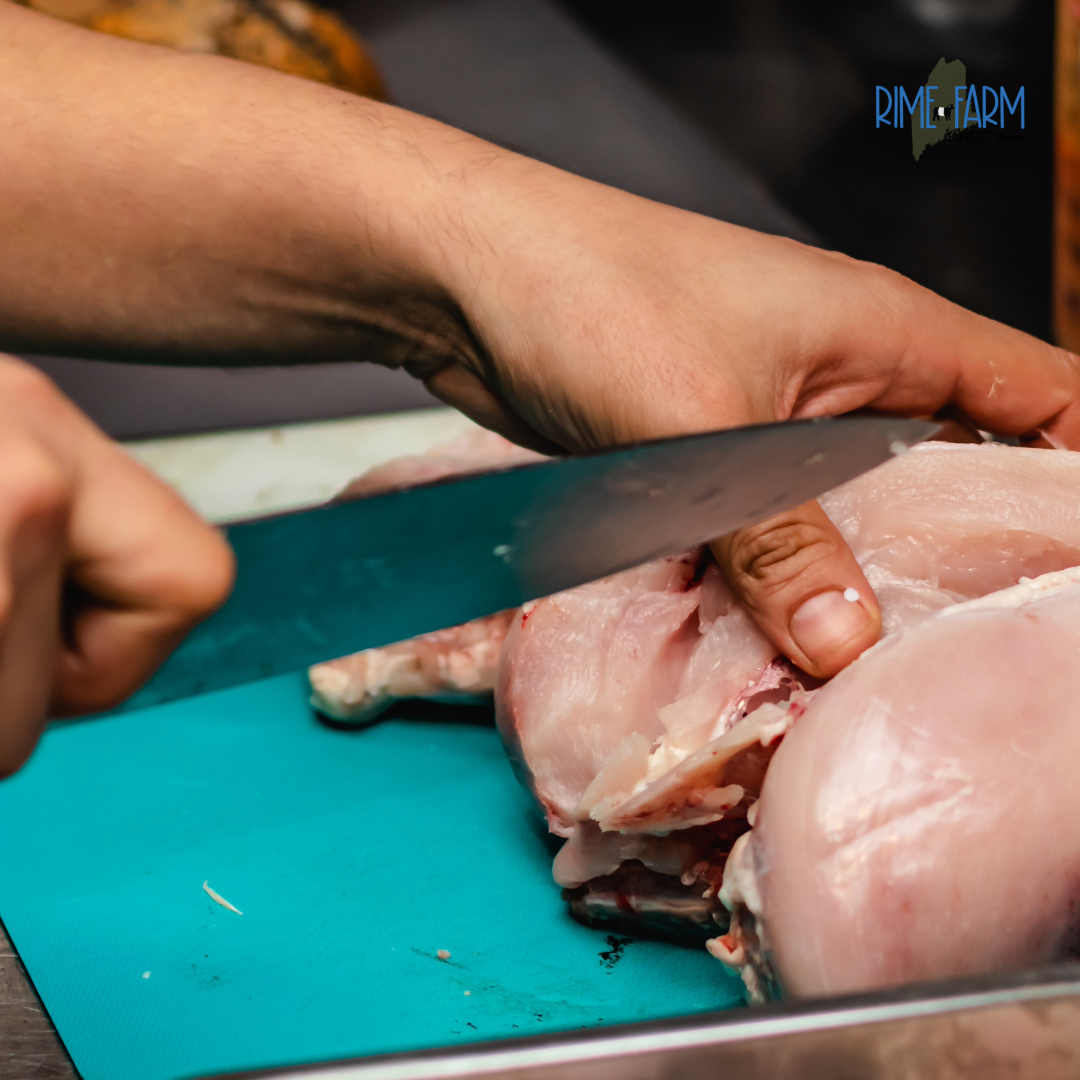
Life on a small farm is filled with moments of beauty and connection—the quiet contentment of a grazing animal, the satisfaction of a well-tended garden, the peace of sunrise over a dewy field. But it is also marked by choices that weigh heavily on the heart. Among the hardest is the decision to send animals to the butcher.
For those of us who raise animals, this moment is never taken lightly. We know each animal as an individual. We have fed them, cared for them when they were sick, and watched them grow. They are not mere commodities but sentient beings whose presence has shaped the rhythm of our days. And yet, their purpose is clear. They are raised to provide food, a reality that sustains us and others but also carries emotional and ethical complexities.
It’s easy for people outside the farming world to romanticize the idea of a pastoral life. But the truth is, farming—especially small-scale, humane farming—requires confronting the full cycle of life and death. While supermarkets neatly package meat in sanitized plastic, the act of raising and harvesting animals brings that process into sharp focus. It forces a deep reckoning with the value of life and the responsibility we bear as stewards of it.
Sending an animal to the butcher is a moment of profound gratitude and respect. For me, it is never routine. I often find myself reflecting on the animal’s life: Was it a good one? Did I provide the best care I could? I thank them silently, acknowledging their role in nourishing my family and others. This gratitude is a far cry from the detachment often present in industrial agriculture. It’s a reminder that the food on our plates carries stories—of land, labor, and lives—that deserve to be honored.
Farm animals are sentient beings. Their intelligence and personalities become clear the longer you spend with them. This bond extends beyond the animals on your own farm. Farmers often come together to help one another care for animals in times of crisis, creating a shared experience of both loss and joy. A few winters ago, we lost a beautiful belted Galloway heifer calf despite around-the-clock emergency care. My best friend Ronda, her husband Terry, my husband Rob, my son and I worked tirelessly to save her. It was devastating for all of us. Yet, we’ve also celebrated together. When my horse Kitty delivered a foal—sired by Ronda’s horse Knight—well before her due date, it took weeks of round-the-clock care to ensure the premie survived. Ronda and I took turns milking Kitty and tubing the foal with a gravity-fed setup. The foal, Ember, pulled through, and she now thrives at Ronda and Terry’s farm, Water’s Edge Farm in Princeton. Those moments of collective joy remind us why we do this work.


WEF PlayboysSparkInTheKnight barn name “Ember” this past summer on Water’s Edge. What a stunner!
Even the smallest losses can leave a mark. My son had a little black Australorp chicken that he referred to as “my chicken.” We have a couple hundred (including chicks) at any given time. So, when one is special, they get named. This chicken was special. She’d be the first to greet him at his door in the morning, sitting there waiting for him to get up. She’d run to him every time she saw him. That one chicken would follow him all over the farm every day as he went about his chores. This went on for a few years. One day, he asked if we had see her. We hadn’t. A few days later, I saw that Seth was a little upset. When I asked what was wrong, he quietly said, “I found my chicken.” I knew what it meant. He didn’t have to say another word. Despite knowing that loss is part of farm life, moments like these hit hard. We try not to get attached, but some animals become more special, and truth be told, you connect with them all in some way.
There are also practical challenges. Finding a trustworthy, ethical butcher who shares your values is no small task. Transporting animals is stressful for them and for us. We use Hatch’s in Aroostook County because they’re a State Inspected facility. A USDA inspector has to be there for the entire process, too. It tells our customers that they’re getting meat that’s Grade A USDA Inspected and that it’s everything we say it is. The animals we send deserve that seal of approval. Here’s a list of all the Maine State Inspected Slaughterhouses: https://www.maine.gov/dacf/qar/inspection_programs/documents/mmpi/2024-state-and-usdainspected-establishments.pdf
Folks, there is an emotional toll in farming—the pang of saying goodbye, even when you know it’s the right thing to do. These are the hidden costs of a commitment to humane farming, costs that don’t appear on a price tag but are felt deeply by those who bear them.
Yet, despite the heartache, I believe this way of farming is worth it. It reconnects us to the realities of our food system and fosters a sense of accountability that industrial agriculture has lost. It’s not about perfection—I struggle with my decisions as much as anyone would. But it’s about striving for a balance that respects both the needs of humans and the dignity of animals.
I often think about how disconnected modern life has become from these realities. Many people eat meat every day without considering where it comes from or the lives behind it. They might balk at the idea of sending animals to the butcher, yet they support a system where animals are treated badly or as numbers on a spreadsheet. By raising animals humanely, I hope to challenge that mindset—to show that there is a way to consume meat responsibly, with gratitude and care.
If there’s one thing I’d like readers to take away, it’s this: the food we eat has a cost beyond dollars and cents. That cost is borne by farmers, animals, and the earth itself. Acknowledging it doesn’t mean we have to stop eating meat, but it does mean we should think carefully about the choices we make. Supporting local farms, reducing waste, and seeking out ethically sourced products are all ways to honor the lives that sustain us.
For me, sending animals to the butcher will never get easier. And maybe it shouldn’t. That difficulty is a reminder of the responsibility I carry and the respect I owe. It’s a weight I willingly bear because it aligns with my values. And it’s a choice I hope inspires others to think about their own relationship with food, farming, and the world around them.
This post is dedicated to Zoey, the Greatest Farm Dog to ever live. Rest in Peace, Zoey girl. I miss you so much it hurts.

Rime Farm, Zoey 2014-2024




Leave a Reply