
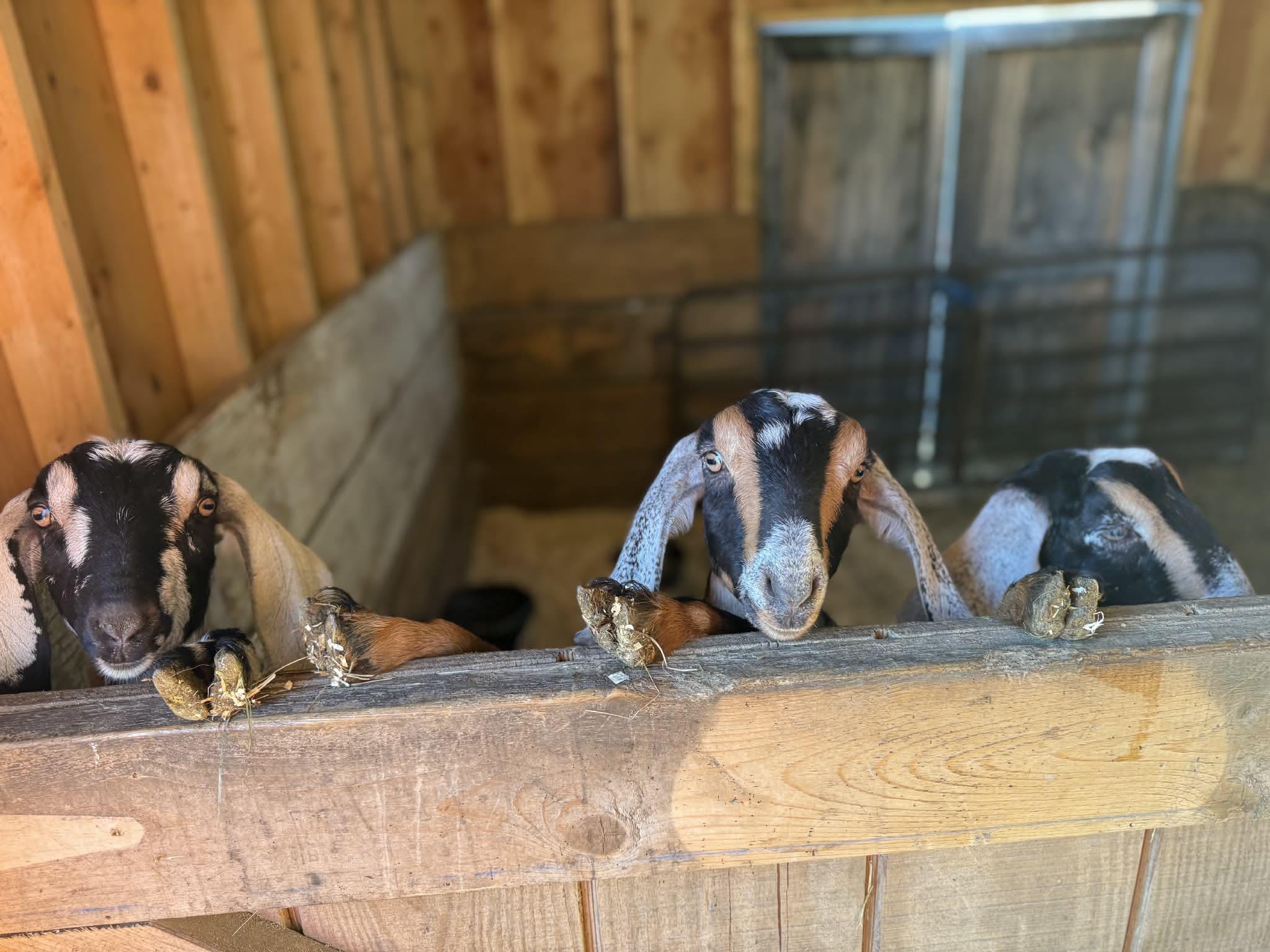
If you keep goats long enough, someone’s eventually tell you to “just deworm them.” That advice used to be common. It’s also far more complicated than it sounds, especially on an organic farm. Let’s talk about FAMACHA scoring in goats!
At Rime Farm, we use FAMACHA scoring as an observation tool. It helps us better understand what’s going on inside of an animal before decisions are made. In a system where animal health, long-term resilience, and organic standards all matter, having good information comes first.

So, What Is FAMACHA?
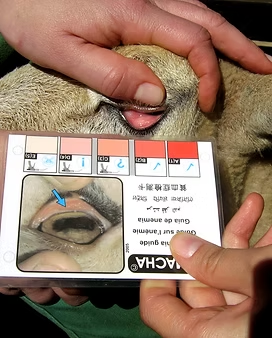
FAMACHA scoring is a method/system used to assess anemia in goats and sheep. We do this by looking at the color of the lower eyelid. In goats, anemia is usually synonymous with the dreaded barber pole worm (Haemonchus contortus). This nasty is a blood-feeding parasite that thrives in warm, wet conditions. Hello, Maine.

What FAMACHA doesn’t do is tell you what to do if your goats have them. In fact, all it does is provide you a clearer picture of whether or not an animal is stressed from blood loss.
How It Works
Using FAMACHA involves restraining the goat gently, pulling down the lower eyelid, pushing in slightly with your fingers, and comparing the color of that inner membrane around the eye to a standardized chart. It sounds complicate but it’s not.
In a nutshell, healthy goats will have darker pink or red eyelid membranes and sick goats will have lighter membranes. Pale eyelids are indicative of reduced red blood cells and, unfortunately the presence of parasites.
Scores basically range from 1 to 5. Lower scores suggest normal blood levels, while higher scores tell us that an animal needs attention.
With practice, the check is quick and not stressful…for the goat. 🙂 Our girls are used to being checked because we started doing it the second we brought them onto our farm.


More Research
Why We Use FAMACHA at Rime Farm
As you know, we farm organically. This means every intervention has some sort of consequence attached. Certain treatments immediately remove an animal from organic status, even when they’re used appropriately.
Because of that, our first priority is prevention. Then, it’s observation. If all goes well, the goats stay healthy and no interventions are necessary.
Preventing barber pole worms is largely about management, not medication. Healthy pasture rotation, no overgrazing, and keeping animals off short, heavily trafficked grass. All of these things reduce exposure since infective larvae live close to the soil surface. On top of this, good nutrition and mineral balance help to support strong immune systems. Lastly, minimizing stress—especially during kidding, weaning, or sudden weather shifts—helps animals resist parasite pressure. Regular observation tools like FAMACHA allow us to notice changes early. Then, hopefully, we can respond before problems escalate.
FAMACHA helps us:
- Identify animals that may be struggling early
- Monitor individuals over time
- Make informed management decisions rather than blanket ones
Sometimes the right response is adjusting nutrition. Sometimes it’s reducing stress or changing living arrangements. Sometimes it’s simply continued monitoring. The point is that FAMACHA gives us information before anything else worse happens.
Parasites, Maine, and a Changing Climate
Parasites are far from a theoretical issue anymore, even this far north. When I was younger, my grandfather used to explain that nasty critters like ticks and the sort didn’t like the weather here—far too cold. That’s clearly no longer the case. We’re now hearing about tick-borne illnesses, more cases of rabies in wildlife, and longer seasons where insects and parasites remain active. For farmers, that shift shows up quietly at first…animals under stress a little earlier in the year, pressure lasting a little longer into fall, and old rules that no longer apply. Managing livestock today means paying attention to those subtle changes and adapting as the climate around us continues to shift.
Warmer winters, wetter springs, and longer grazing seasons have changed the landscape in Maine. Simple tools like FAMACHA help farmers adapt without defaulting to practices that may no longer align with their values, systems, or certifications.
Sadly, a lot of older advice was built for a climate we don’t live in anymore.
What FAMACHA Can — and Can’t — Tell You
So, we’ve explained that FAMACHA is useful, but it has limits. It can indicate possible anemia. It can’t identify the cause on its own. Nutritional deficiencies, mineral imbalances, illness, or other stressors can all affect eyelid color.
For us, FAMACHA is only one piece of the pie that includes pasture management, diet, seasonal conditions, and close daily observation.
A Gentle Note…
This post reflects how we use FAMACHA at Rime Farm as part of organic livestock management. It’s not a prescription or a substitute for veterinary guidance. If an animal appears unwell, that should always, always comes first. FAMACHA is a tool for observation only. It’s a good one but, it’s only a tool.


Leave a Reply