
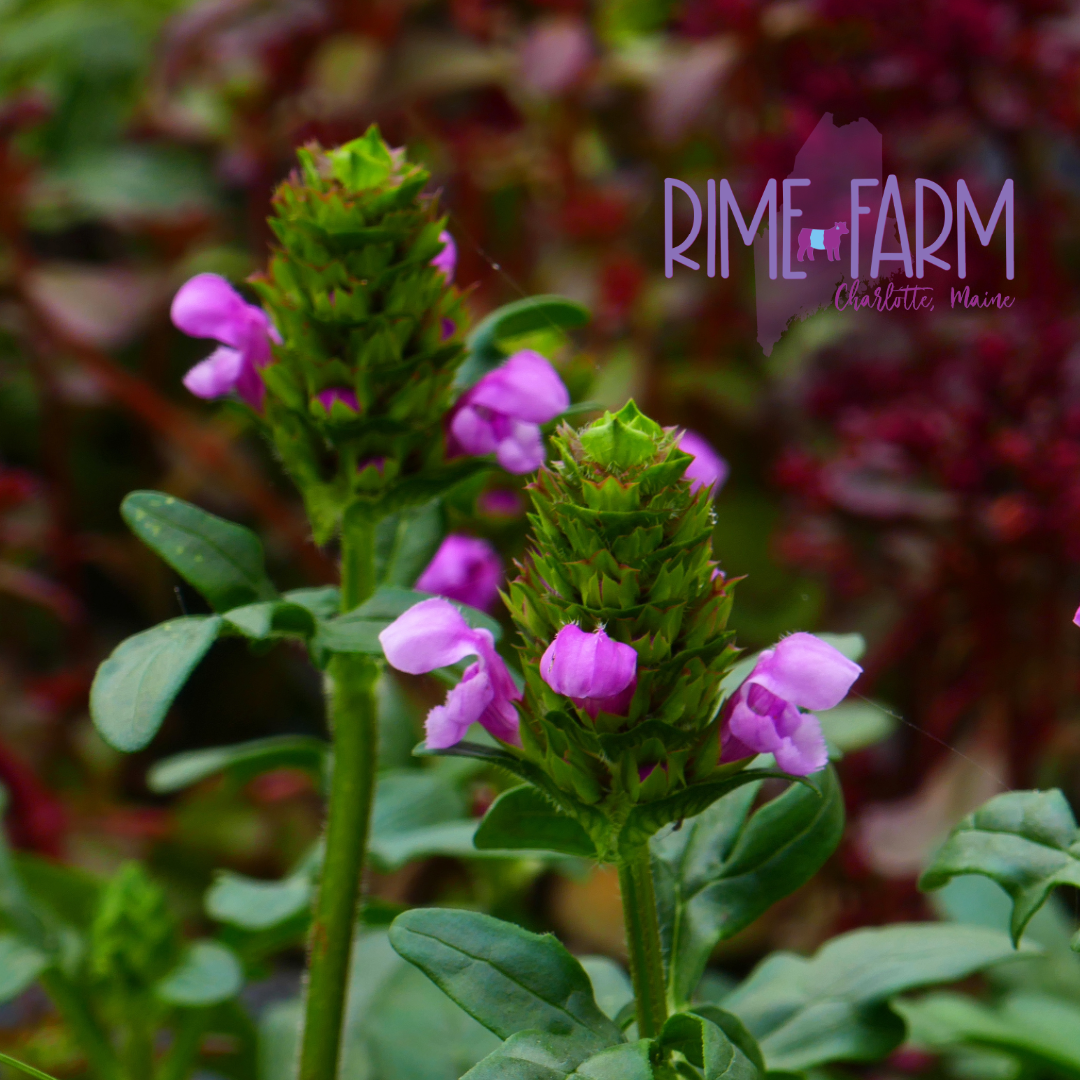
Tucked quietly into the corners of meadows, hedgerows, and old herbals is Prunella vulgaris. Affectionately known as “self-heal,” this unassuming plant has long been a companion to herbalists, healers, foragers, and farmers alike. I recently started a tray of seedlings and thought it was the perfect moment to reflect on why this humble herb deserves a place in the garden, on the blog—and absolutely in the apothecary.
Low-Maintenance, Easy to Grow!
Self-heal is an easy keeper, which is part of its charm. A perennial in the mint family (Lamiaceae), it spreads in low-growing clusters once established. While it prefers moist, well-drained soil and partial sun, it tolerates a surprisingly wide range of conditions—a bonus for anyone cultivating wild edges or pollinator plots, or layering herbs in a guild. (That’s where we plant our seedlings.)
I started mine a couple of weeks ago in mid-March. You can also direct sow as soon as the soil begins to warm, usually by late May or early June. Just be sure the threat of frost has passed. That’s one of the things I love about self-heal—it’s flexible. You can start it indoors or sow it directly. So simple.
We source our certified organic seeds from Strictly Medicinal Herbs—they’ve never let us down. To give them the best start, we use our own compost and potting mixes from Living Acres Organic Farm here in Maine. (A good, nutrient-rich potting soil saves you time and sets your plants up for success.)

Self-heal does best with frequent but gentle watering. (We use a spray bottle.) In about two weeks, the seedlings will break the soil surface and begin to unfurl.
Once mature, self-heal is quite lovely: small purple flower spikes, square stems, and bright green leaves that almost seem to hum with quiet purpose.
Medicinal Properties of Self-Heal
As the name implies, self-heal has long been used as a natural remedy for a wide variety of ailments. Traditional Western herbalism values Prunella vulgaris for its ability to cool inflammation, while Traditional Chinese Medicine regards it as a powerful immune-supporting and heat-clearing herb. Its properties include:
- Astringent and Anti-inflammatory: Excellent for topical use on wounds, cuts, bruises, and minor skin irritations.
- Antiviral and Immune Modulating: Contains rosmarinic acid and ursolic acid, both of which show antiviral potential in studies.
- Lymphatic Tonic: Supports lymphatic flow and may help reduce swollen glands or mild fluid retention.
- Adaptogenic and Nervine Qualities: While not a traditional adaptogen, many herbalists consider it gently balancing for those managing chronic stress or burnout.
Traditionally, self-heal has been used to soothe sore throats, create mouth rinses for ulcers, calm digestive discomfort, and even as an eyewash for conjunctivitis. Like many beloved herbs, it’s both specific and versatile—gentle in effect but with a reach that extends far beyond what its modest appearance might suggest.
Making a Tincture or Elixir
Harvesting: The aerial parts—leaves, stems, and flowers—are all medicinal. Harvest when the plant is in bloom, ideally in the late morning once the dew has lifted. This is my favorite time in the herb garden: the plants are vibrant, the bees are busy, and the quiet feels sacred. We’ve also noticed that many herbs are less bitter after the sun is up—likely because the essential oils have begun to move more freely through the plant.
Tincture
You’ll need:
- Fresh self-heal (chopped)
- High-proof alcohol (80–100+ proof)
- Clean glass jar
- Amber bottles for storage
Steps:
- Chop the herb to increase surface area.
- Fill a jar about ¾ full with the fresh herb.
- Cover completely with alcohol.
- Label with the date and contents.
- Let it steep in a cool, dark place for 4–6 weeks, shaking gently every few days.
- Strain, bottle, and store in amber glass.
Use: 1–2 droppersful as needed for immune support or viral illness. Can also be added to wound washes.
Elixir (Sweeter + Daily-Friendly)
Follow the tincture process above. After straining, add raw local honey—roughly ¼ the volume of the tincture—and stir to combine.
This creates a shelf-stable, sweet herbal extract that’s easier to take straight, especially for children or those sensitive to alcohol’s intensity.
A Note of Gratitude
There’s something grounding about tending a plant like self-heal. It doesn’t ask for much—just space to grow, a little water, and some time. Yet it gives so much in return. Whether you’re harvesting it for medicine or simply letting the pollinators enjoy its blooms, this plant belongs close at hand.
In an era when many of us are seeking to reclaim both our health and our food systems, Prunella vulgaris serves as a quiet reminder: so much can be healed when we tend the land and allow the land to tend us back.
Photo Courtesy: Strictly Medicinal Herbs




Leave a Reply to visionsinstonefarmCancel reply