
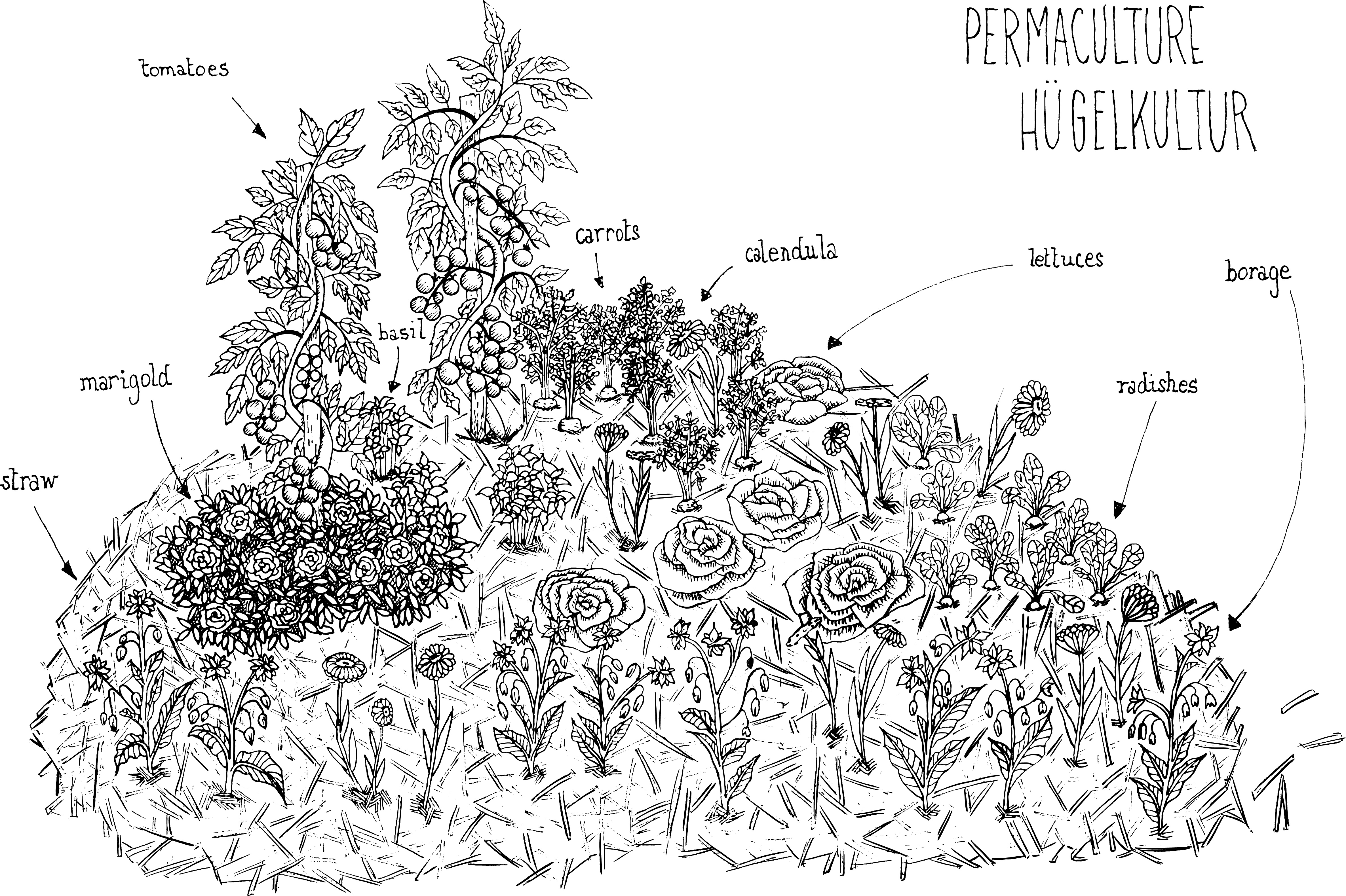
In today’s world, where the conversation around sustainable living is more relevant than ever, an age-old farming technique, hugelkultur, is making a remarkable comeback. This method, rooted in Eastern European and Germanic history/traditions, offers a eco-friendly approach to gardening and farming that is both sustainable AND beneficial for our environment.
Step 1: Understanding the Foundation
Hugelkultur, which translates to “hill culture” or “hill mound,” begins with the collection of logs, branches, and other woody debris. This step is reminiscent of ancient practices where communities would make use of fallen trees and brush, ensuring nothing was wasted. By incorporating these materials into our garden, we tap into a cycle of life that enriches the soil as these materials slowly decompose, offering a sustainable method of waste management and homes for vermaculture. Vermiculture is the scientific process of cultivating worms to break down organic food waste into nutrient-rich material. The output of vermiculture is called vermicompost. I promise to talk about vermaculture in another blog post!

Step 2: Building the Mound
Once you’ve gathered all of your decomposing woody materials, the next step is to arrange them into a mound. Hugelkutur beds can vary in length, so build it any size that works for you and your growing needs. We’ve made a modest raised bed using hugelkultur and also it to construct a big mound several meters in length. The mound mimics natural processes found in forests where fallen wood creates a microenvironment for soil organisms and plant growth. The elevation not only improves drainage but also warms the soil faster in the spring, extending the growing season – a crucial benefit in the face of shifting climate patterns.
Step 3: Adding Layers
After setting up the woody base, it’s time to layer on smaller materials like leaves, grass clippings, compost, and manure. We use our own Rime Farm compost and manure from our belted galloway cattle. The stratification we create would be similar to the layers found in a healthy soil profile. Each contribute to different aspects of the environment, adding nutrients and structure. These layers also act like a sponge, retaining moisture and reducing the need for irrigation, a critical factor in regions facing water scarcity.

Step 4: Planting
With the mound constructed and layered, you’re ready to plant! Hugelkultur beds can support a wide range of plant life, from vegetables to herbs and even small trees. This diversity not only creates a more resilient garden but also mirrors the biodiversity found in natural ecosystems. One of the greatest benefits is they create a natural habitat that support pollinators and other beneficial insects.

Step 5: Mulching
The final step is to apply a thick layer of mulch. This can be straw, wood chips, or leaf mold. For those who don’t know, leaf mold is made from fallen leaves. It’s different from traditional compost in that is the process is dependent on fungus rather than bacteria. As a result, the process is slow. Again, another post!
Mulching, no matter what you use, helps with moisture retention and weed suppression and adds to the organic matter as it breaks down. Mulching has always been an essential practice in farming because it reduces soil erosion and helps to maintain soil health. Both of these functions are vital in our ongoing efforts to combat climate change.

Why Hugelkultur is a Win for the Environment
Hugelkultur beds are a testament to the philosophy of working with nature rather than against it. They improve soil fertility and structure, promote biodiversity, and efficiently cycle nutrients. Moreover, by sequestering carbon within the decomposing logs, hugelkultur beds contribute to carbon sequestration efforts. This helps to mitigate the greenhouse effect responsible for global warming. Because of how the hugelkultur beds are stratified, they recycle the benefits of the organic material and, perhaps more importantly, significantly reduce water usage. This makes them a model of sustainable agriculture!
In embracing this method, we’re reconnecting with ancient wisdom. By applying it to modern environmental challenges, we’re working on sustainable living and offering a blueprint for a future where agriculture works in harmony with nature. We need to look towards solutions for climate change and hugelkultur stands out as a beacon of hope. Sometimes, the best way forward is to look back.
See what we grow using hugelkultur on our website: http://RimeFarm.com





Leave a Reply