
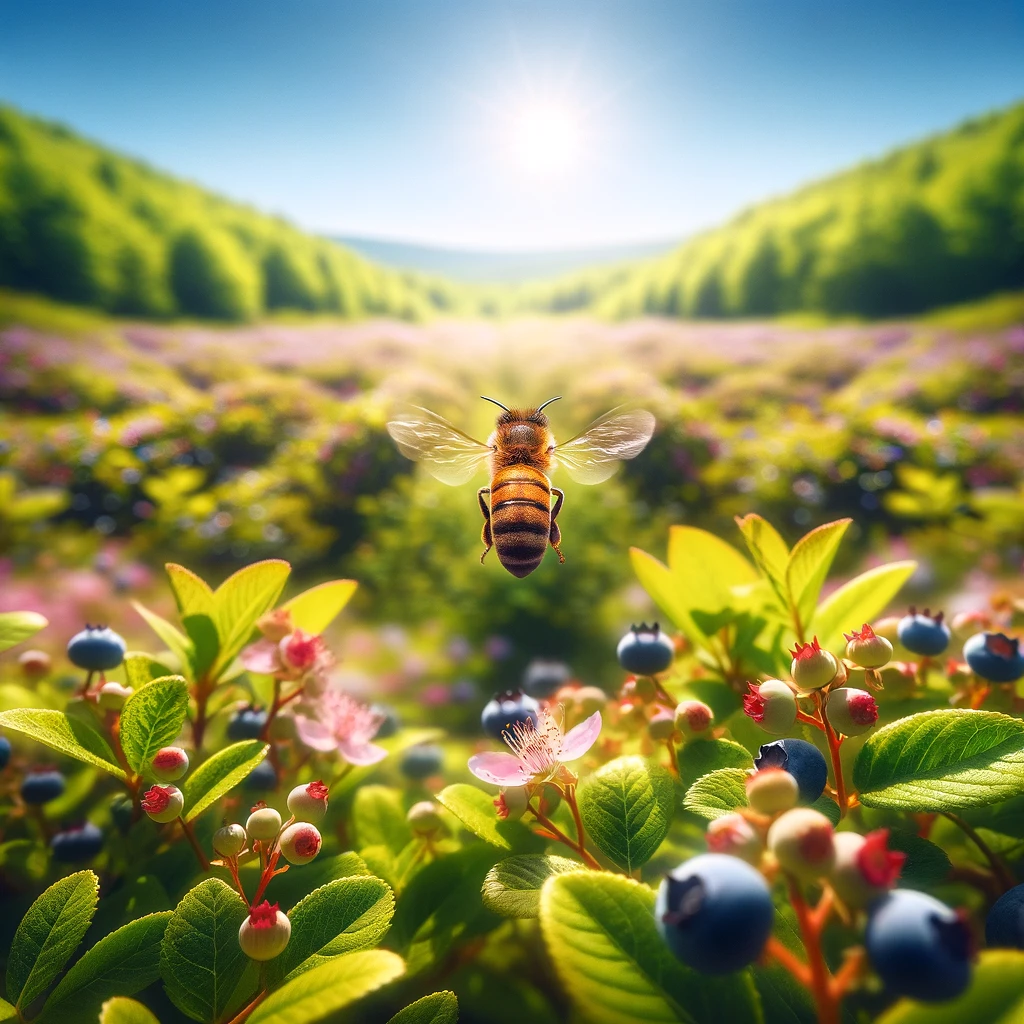
Integrated Pest Management (IPM)
At Rime Farm, our approach to farming goes beyond merely cultivating crops; it’s about nurturing an ecosystem where bees can thrive amidst the challenges they face, including the alarming phenomenon known as Colony Collapse Disorder (CCD). This disorder, characterized by the sudden disappearance of worker bees leaving behind the queen and young, poses a significant threat to bee populations globally. The causes of CCD are multifaceted, including exposure to pesticides, especially neonicotinoids, environmental stresses linked to climate change, and attacks by pathogens and parasites like the Varroa mite.

Recognizing these challenges, we’ve adopted Integrated Pest Management (IPM) strategies, significantly reducing our reliance on harmful chemicals. By prioritizing natural pest control methods, such as crop rotation and the introduction of beneficial predators, we’re not only protecting our bees from toxic exposure but also promoting biodiversity. This biodiversity is crucial, as a varied ecosystem is more resilient and provides a stable habitat for bees, combating factors that contribute to CCD.
Our efforts extend to habitat conservation and restoration, crucial for bee survival. By maintaining areas filled with diverse plant life like hedgerows and wildflower margins, we offer bees a rich array of foraging options and nesting sites. This variety is not just about food; it’s about creating a balanced environment where bees can perform their vital role in pollination under optimal conditions.

Understanding the broader impacts of climate change on bees, our farming practices are designed with resilience at their core. Techniques such as rainwater harvesting and the use of drip irrigation address the challenges of drought, while our commitment to agroforestry and permaculture enhances the farm’s carbon sequestration capabilities. These efforts contribute not just to the mitigation of climate change but also to creating a sustainable habitat for bees, ensuring they have the resources they need to survive and thrive.
In promoting biodiversity, our aim is to support a robust ecosystem that can resist disease outbreaks and pest invasions, further safeguarding our bee communities. By fostering a wide range of plant species, we ensure a continuous bloom cycle, providing bees with a consistent source of nutrition. This, in turn, supports their health and resilience, making them better equipped to withstand the pressures of CCD and other threats.
Beyond the boundaries of our farm, we hope to engage with the community by spreading awareness about the importance of bee conservation and sustainable farming practices. Through upcoming workshops, farm tours, and participation in local agriculture networks, we hope to inspire others to take actions that support bee health. This collective effort is crucial in addressing the crisis facing bee populations.
At Rime Farm, we believe in being part of the solution, adapting our practices to address the complex challenges threatening bees. Through innovative farming techniques, a commitment to habitat conservation, and active community engagement, we’re contributing to the preservation of bees while advancing the broader goals of environmental sustainability and climate resilience. This holistic approach underscores the critical role that farmers and agricultural communities play in safeguarding the health of pollinators and, by extension, the stability of our ecosystems and food systems. By understanding and addressing the science behind the challenges bees face, we can ensure they continue to play their critical role in our ecosystems and agriculture.
For your further reading section on the topic of Colony Collapse Disorder (CCD) and bee health, We’ve compiled a list of peer-reviewed research articles. These studies offer a comprehensive look into various factors contributing to CCD, pathophysiological traits that could serve as biomarkers for colony health, the role of pathogens in bee colony collapses, the impact of pesticides, and the effects of neonicotinoids on honey bee health. Here are some noteworthy studies:
Colony Collapse Disorder: A Descriptive Study – This study aims to characterize the spatial distribution of strong, weak, and dead colonies in apiaries with and without CCD symptoms, offering insights into potential causes of CCD. The research delves into the specifics of colony conditions and the possible infectious nature underlying CCD (PLOS ONE)
https://journals.plos.org/plosone/article?id=10.1371/journal.pone.0006481
Colony Collapse Disorder (CCD) and Bee Age Impact Honey Bee Pathophysiology – This research applies pathophysiology to honey bees to identify abnormalities that could diagnose colonies before they exhibit late-stage CCD symptoms. It developed a standard ranking system to score gross lesions and other symptoms, identifying physio-pathological traits as potential biomarkers for colony health (PLOS ONE).
https://journals.plos.org/plosone/article?id=10.1371/journal.pone.0006481
Pathogen Webs in Collapsing Honey Bee Colonies – Exploring the connections between pathogens and CCD, this study conducts a country-wide survey of pathogens in collapsed and healthy colonies. It examines the prevalence and abundance of pathogens in CCD colonies, suggesting that pathogen interactions may contribute to CCD (PLOS ONE).
https://journals.plos.org/plosone/article?id=10.1371/journal.pone.0043562
Bee Colony Collapse Associated with Viral, Fungal Infection – Highlighting the link between viral and fungal infections and bee colony collapse, this article discusses the importance of identifying and controlling such infections to mitigate CCD risks (ScienceDaily).
https://www.sciencedaily.com/releases/2010/10/101007183018.htm
Losses of Honey Bee Colonies across the World – Focusing on honey bee colony losses globally, this study assesses loss rates and factors associated with these losses in Mexico’s semi-arid high plateau region. It suggests strategies for improving queen quality and controlling diseases and varroasis (MDPI Insects).
https://www.mdpi.com/journal/insects/special_issues/Losses_Bee_Colonies
Assessment of Chronic Sublethal Effects of Imidacloprid on Honey Bee Colony Health – Investigating the impact of the neonicotinoid insecticide imidacloprid on honey bee health, this study evaluates pesticide exposure within hives and its relation to CCD. It addresses the systemic activity of neonicotinoids and their presence in pollen and nectar, highlighting concerns over their toxicity to bees (PLOS ONE).
https://journals.plos.org/plosone/article?id=10.1371/journal.pone.0118748





Leave a Reply