
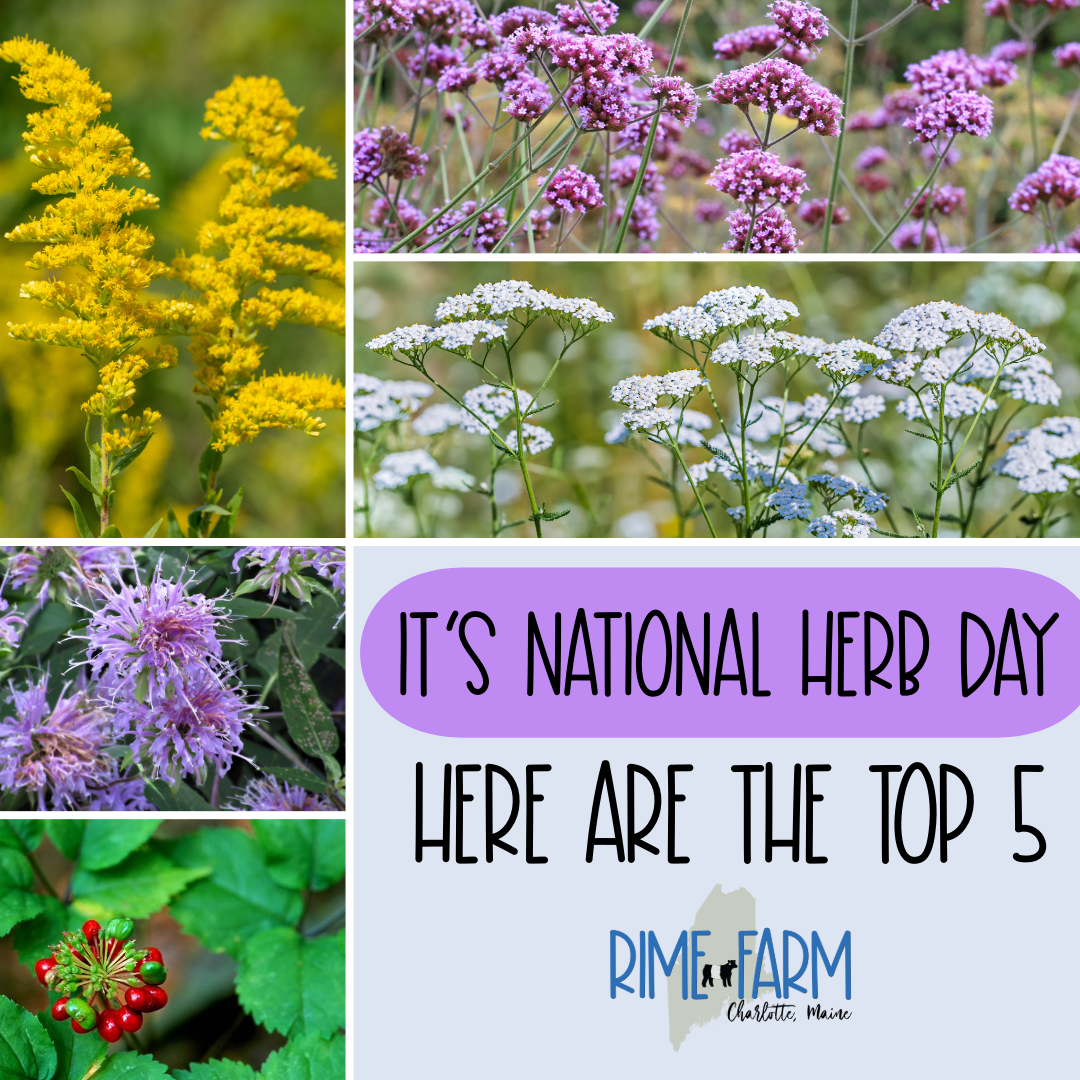
Maine’s Zone 5B offers a wonderful environment for a variety of native herbs. Like all Mainers, they’re known for their resilience and minimal care requirements. (We’re a low maintenance bunch!)
These herbs not only thrive in local conditions but also contribute positively to the local ecology and, what’s more is that they support beneficial insects and wildlife. Here are the top five native herbs that you can find growing wild in this region:
1. Wild Bergamot (Monarda fistulosa)
Wild Bergamot, also known as Bee Balm, is a standout herb native to Maine. It flourishes in Zone 5B’s climate, producing beautiful lavender flowers that are highly attractive to pollinators such as bees and hummingbirds. This perennial herb is renowned for its strong, minty aroma and has a history of being used in teas and medicinal remedies to treat various ailments. It prefers full sun to partial shade and well-draining soil.

2. American Ginseng (Panax quinquefolius)
American Ginseng is a valuable and sought-after herb native to the deciduous forests of Maine. It thrives in the shadier, cooler parts of Zone 5B. Known for its health-boosting properties, Ginseng requires a bit more care and patience to cultivate, as it grows slowly and prefers rich, well-drained soil. Its roots are most commonly used in teas, tinctures, and supplements.

3. Goldenrod (Solidago spp.)
Often unjustly blamed for hay fever, which is actually caused by ragweed, Goldenrod is a hardy perennial that lights up the landscape with its vibrant yellow flowers in late summer and fall. It is extremely easy to grow and maintains itself without much intervention. Goldenrod is traditionally used in Native American medicine and is believed to have anti-inflammatory properties.

4. Yarrow (Achillea millefolium)
Yarrow is an incredibly versatile herb that grows abundantly in the wild across Maine. It prefers full sun and well-drained soil, but can tolerate a variety of conditions, including drought. With its attractive white to pink flowers, yarrow is not only a favorite for pollinators but also a staple in herbal medicine, used for its wound healing and anti-inflammatory properties.

5. Blue Vervain (Verbena hastata)
Blue Vervain is another herb native to Maine that offers both beauty and medicinal benefits. It typically grows in wetter areas, making Zone 5B’s moist environments ideal. Known for its striking slender spikes of purple flowers, it attracts numerous pollinators. Herbalists value Blue Vervain for its use in relieving nervous tension and promoting relaxation.

Embracing Native (and Wild!) Herbs
Incorporating these native herbs into your garden not only enhances biodiversity but also provides a haven for wildlife and pollinators. Each of these herbs has adapted perfectly to Maine’s climate, requiring less maintenance while offering their unique aesthetics and health benefits. Whether you’re a seasoned herbalist or a casual gardener, these native herbs are a fantastic addition to any garden in Zone 5B. Remember, while these herbs are easy to grow, ensuring you have the right soil conditions and light exposure will yield the best results. Enjoy the process of watching these native wonders thrive in your own backyard!





Leave a Reply