
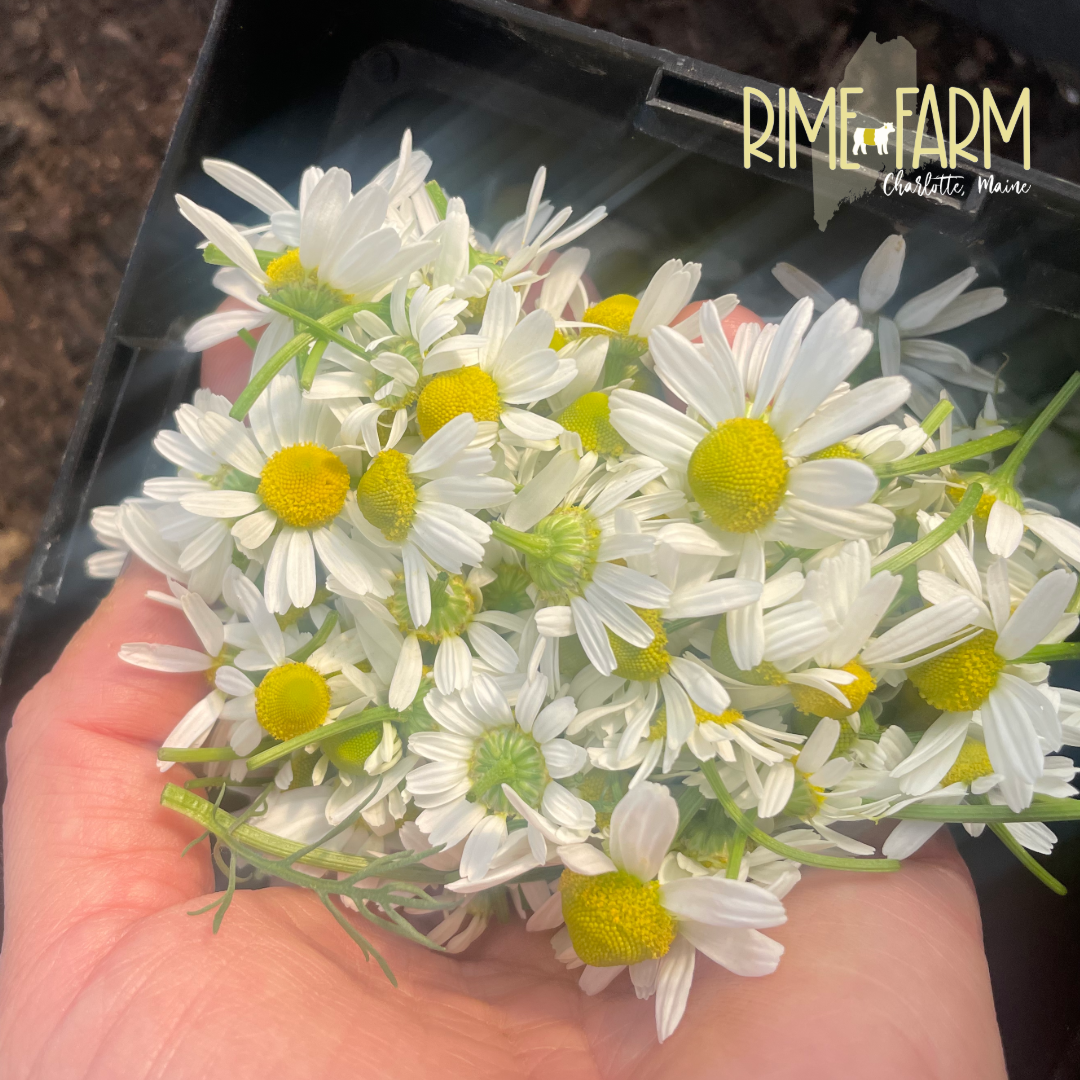
Chamomile, pronounced as “kam-uh-myl” or “kam-uh-meel,” is a name that evokes a sense of calm and tranquility, much like the soothing tea brewed from its blossoms. They’re so pretty!!! Interestingly, our intern Carolyn, has taken to calling it “cham-mom-eh’-lay”, proving that it can be both whimsical AND beloved as a herb. The history of chamomile is as rich and varied as its pronunciation, weaving through ancient civilizations, traditional medicine, and modern-day wellness practices.
The story of chamomile begins in ancient Egypt. There, it was revered as sacred. The Egyptians associated chamomile with the sun god Ra, using it to treat fever and as an ingredient in embalming oil. Its medicinal properties were so esteemed that it was also offered as a cure for malaria. From Egypt, chamomile’s reputation spread to the Romans and Greeks, who continued to utilize it for its healing virtues. The ancient Greek physician Hippocrates, referred to as the father of medicine, documented chamomile’s use in treating digestive disorders and inflammations. (You can read more on the science from this 2010 study.)
During the Middle Ages, chamomile found a new home in European herbal medicine. Monastic gardens cultivated this herb extensively, and it became a staple in the treatment of ailments ranging from skin conditions to digestive issues. The Saxons considered it one of the nine sacred herbs, essential for warding off disease and evil spirits. By the 16th and 17th centuries, chamomile was entrenched in British herbal lore, used not only for its medicinal properties but also for its pleasant, apple-like fragrance that made it a popular choice for strewing floors and freshening the air in homes and public spaces.
We can attest to just how soothing it smells. It’s one of my favorites, can you tell?

In traditional European medicine, chamomile was often employed in the form of poultices and compresses to reduce inflammation and promote healing of wounds. Its anti-inflammatory and antispasmodic properties were highly valued, making it a versatile remedy for a variety of complaints. The practice of using chamomile tea as a soothing bedtime drink can be traced back to these early uses, where it was recognized for its ability to calm the mind and body.
The health benefits of chamomile are numerous and well-documented. Modern research has confirmed many of the traditional uses of chamomile, highlighting its potential in treating conditions such as anxiety, insomnia, and gastrointestinal disturbances. The flavonoids and essential oils present in chamomile contribute to its anti-inflammatory, antioxidant, and antimicrobial effects. Drinking chamomile tea can help alleviate symptoms of stress and anxiety, promote better sleep, and support digestive health. Topical applications of chamomile can soothe skin irritations, reduce the severity of eczema, and aid in wound healing.
Growing chamomile is a rewarding endeavor that harkens back to the old-timey ways of herbal gardening. This herb, with its delicate, daisy-like flowers, prefers well-drained soil and a sunny location. German chamomile (Matricaria recutita) and Roman chamomile (Chamaemelum nobile) are the two main varieties cultivated, each with its own unique qualities. German chamomile is an annual plant, known for its taller growth and prolific blooms, while Roman chamomile is a perennial, forming a low-growing mat of fragrant foliage and flowers. (We’ve grown both varieties.)
This is a row of German Chamomile growing in our high tunnel in late May.

To cultivate chamomile, you should sow the seeds in early spring. These you gently press them into rich soil without covering them, as they require some light to germinate. Patience is key, because unlike peas, chamomile seeds can take a couple of weeks to sprout. Once established, chamomile requires minimal care, thriving with regular watering and occasional weeding. They can also be prolific! The true reward comes in the summer months when the plants burst into bloom, their tiny white petals and yellow centers attracting pollinators and releasing a sweet, apple-like scent.
Harvesting chamomile involves a gentle touch. The flowers should be picked when they are fully open, typically in the morning after the dew has evaporated. This ensures the highest concentration of essential oils, which are responsible for the plant’s therapeutic properties. Using a sharp pair of scissors or simply pinching the flowers off at the base, one can gather a bountiful harvest over the course of the blooming season.
Once harvested, the chamomile flowers must be dried to preserve their potency. This can be done by spreading them out in a single layer on a clean, dry surface in a well-ventilated area away from direct sunlight. Alternatively, a dehydrator set to a low temperature can be used for faster drying. The flowers are ready for storage when they are completely dry and brittle to the touch. They should be stored in an airtight container in a cool, dark place, where they can retain their medicinal properties for up to a year.

Once you have the dried flowers, you can use it for a variety of products. We put it in our own soap, make salves and tinctures with it, and we make our tea!

To make chamomile tea, simply add a teaspoon or two of dried flowers per cup of boiling water. The flowers can be placed in a tea infuser (like the one here, or this one shown below) or put directly in the cup, and the boiling water is poured over them. Covering the cup while the tea steeps for five to ten minutes ensures that the beneficial oils are retained in the brew. The tea can be strained before drinking and may be sweetened with honey or enhanced with a slice of lemon (according to your personal preference). (If you’re adventurous, you can add other herbs like our peppermint and lemon balm to make wonderful combinations of aromatic loveliness!)

The journey of chamomile from ancient Egyptian rituals to modern wellness practices is a testament to its enduring appeal and efficacy. Whether it is pronounced “kam-uh-myl,” “kam-uh-meel,” or even “cham-mom-eh’-lay,” chamomile remains a beloved herb for its soothing and healing properties. Growing and harvesting chamomile on your farm not only connects you with centuries of herbal tradition but also provides you with a natural remedy that can be enjoyed in the form of a comforting cup of tea.






Leave a Reply