
As we hunker down through this next wicked cold snap, it’s hard to believe spring is just 75 days away. The snow-blueberry field, the still air, and the humming of the heaters all scream “winter,” but in the back of my mind, I’m thinking Spring. The seed catalogs are open, my head’s full of ideas, and I’m dreaming of digging my toes (through my crocs) into warm fluffy, freshly tilled garden beds.
Winter isn’t just a time for dreaming—it’s also the perfect time to prep for the challenges (and joys) that lie ahead. For those of us in Downeast Maine, that includes gearing up for planting, organizing our tools, and yes, preparing for the messy in-between season we know all too well: mud season.
Take Stock of Your Seeds
Before diving into those glossy catalogs, take a moment to inventory the seeds you already have. For seeds that are a year or two old, test their viability with a simple germination test: place a few seeds on a damp paper towel, keep them in a warm spot, and check after a few days to see if they sprout.
As a general rule, we only keep certain varieties beyond a year. Running a labor-intensive operation means we can’t afford the risk of planting seeds with low germination rates. That said, we do maintain a special stash of older varieties—carefully saved for posterity and safekeeping. These heirlooms connect us to past growing seasons and ensure we’re preserving something valuable for the future.
Plan Your Layout
Grab some graph paper or download a garden-planning app and start mapping out your crops for this year’s garden spaces. We rotate last year’s beds to keep the soil healthy, ensuring no crop depletes the same nutrients year after year. We also consider new companion planting combinations that work to save space and fend off pests. For example, planting tomatoes with basil will not only make efficient use of space but it also help with pests like whiteflies. Another good combo is carrots and onions. They work well together by masking each other’s scents which actually confuses potential predators. Thoughtful planning now can make all the difference when the growing season begins.
Here’s a concise companion planting guide for Zone 5b with common vegetables and their best companions. It also includes plants to avoid pairing.
Companion Planting Guide for Zone 5b
Tomatoes
- Best Companions:
- Basil: Repels whiteflies and improves flavor.
- Marigolds: Deters nematodes and aphids.
- Carrots: Aerates soil and coexists well.
- Garlic/Onions: Repels pests like spider mites.
- Avoid Planting With:
- Corn (attracts tomato worms).
- Potatoes (increased risk of blight).
Carrots
- Best Companions:
- Onions: Repels carrot flies.
- Lettuce: Provides shade, helping carrots thrive.
- Tomatoes: Breaks up soil and maximizes space.
- Avoid Planting With:
- Dill (can stunt carrot growth).
Peppers
- Best Companions:
- Basil: Repels aphids and hornworms.
- Spinach: Grows well in the shade of taller peppers.
- Onions/Chives: Keeps pests away.
- Avoid Planting With:
- Beans (competes for nutrients).
Cucumbers
- Best Companions:
- Beans: Fix nitrogen, benefiting cucumber growth.
- Radishes: Deter cucumber beetles.
- Nasturtiums: Attract beneficial insects and repel aphids.
- Avoid Planting With:
- Potatoes (competition and disease risk).
- Sage (hinders growth).
Beans
- Best Companions:
- Corn: Supports climbing varieties.
- Squash: Provides ground cover, suppressing weeds.
- Radishes: Deters pests.
- Avoid Planting With:
- Onions/Garlic (inhibit bean growth).
Lettuce
- Best Companions:
- Radishes: Loosens soil for lettuce roots.
- Carrots: Mutual shading benefits both plants.
- Strawberries: A natural ground cover pairing.
- Avoid Planting With:
- Broccoli (competes for nutrients).
Zucchini and Summer Squash
- Best Companions:
- Nasturtiums: Repels squash bugs.
- Corn: Provides a natural trellis for sprawling vines.
- Beans: Enrich soil with nitrogen.
- Avoid Planting With:
- Potatoes (shared pests).
Broccoli
- Best Companions:
- Celery: Repels cabbage worms.
- Onions: Discourages pests.
- Dill: Attracts beneficial insects.
- Avoid Planting With:
- Strawberries (competes for nutrients).
- Tomatoes (inhibits broccoli growth).
Potatoes
- Best Companions:
- Beans: Improves nitrogen in the soil.
- Cabbage: Keeps potato beetles at bay.
- Marigolds: Deters nematodes.
- Avoid Planting With:
- Tomatoes, Peppers, and Cucumbers (shared diseases).
Radishes
- Best Companions:
- Carrots: Share space efficiently.
- Lettuce: Benefits from radish’s quick growth.
- Cucumbers: Deters pests.
- Avoid Planting With:
- Hyssop (stunts radish growth).
Onions and Garlic
- Best Companions:
- Carrots: Repels carrot flies.
- Lettuce: Grows well alongside these alliums.
- Beets: Non-competitive root companions.
- Avoid Planting With:
- Beans and Peas (growth inhibition).
Corn
- Best Companions:
- Beans: Provide nitrogen for the corn.
- Squash: Acts as ground cover to suppress weeds.
- Sunflowers: Act as windbreaks and attract pollinators.
- Avoid Planting With:
- Tomatoes (shared pests).
Spinach
- Best Companions:
- Strawberries: Offers mutual shading and protection.
- Radishes: Grow well together due to different root depths.
- Peppers: Spinach thrives in their shade.
- Avoid Planting With:
- Potatoes (may hinder spinach growth).
Get Your Tools and Supplies Ready!
Winter’s the perfect time to sharpen those tools, fix broken handles, and clean out the shed. It’s also a good idea to inventory what you’ll need—seed trays, row covers, fertilizer—and order now before spring rushes in and you’re scrambling.
We have lists everywhere. We keep one of those old black and white composition notebooks handy to jot things down. The cover is sturdy and is easy to tote around.
As far as tools go, we get a good majority of garden tools from Two Bad Cats.
Check them out here: https://twobadcatsllc.com/
Their wire weeders are the best. We’ve used the 60″ wire weeder with one flat for our high tunnel rows for a couple of years and it’s still going strong. (By the way, we aren’t paid affiliates or associated with any of the recommendations here. It’s an honest to goodness old fashioned shout out.)

Think Soil Health
Healthy soil makes or breaks your growing season. If you got a soil test recently, now’s a great time to plan for spring amendments. Knowing whether your soil needs more nitrogen, organic matter, or a pH adjustment can make all the difference. We use University of Maine’s extension office for our soil tests. (Every University should have one!) Here’s more on that:
University of Maine Soil Testing Service
The University of Maine’s Analytical Laboratory and Soil Testing Service provides soil analysis to help optimize your garden or farm’s productivity.
- Soil Test Kits: You can obtain a soil test kit from any UMaine Extension County Office or request one directly from the lab. University of Maine Extension
- Sampling Instructions: Detailed guidelines on how to collect and submit soil samples are available to ensure accurate results. University of Maine Extension
- Submission Address:
Maine Soil Testing Service 5722 Deering Hall Orono, Maine 04469-5722 - Processing Time: Results are typically available within two weeks. University of Maine Extension
- Fees: The standard soil test fee is $18, and the comprehensive test is $25. University of Maine Extension. Get the $25 one for some great enlightening information!
Here are some additional resources that we’ll blog about in the future.
- Video: Learn how to properly collect a soil sample by watching this informative video. University of Maine Extension
- Understanding Your Results: For assistance in interpreting soil test results, the UMaine Extension offers guidance to help you make informed decisions about soil amendments. University of Maine Extension
This is a really essential part of maintaining soil health and getting the best plant growth. Our UMaine Cooperative Extension is wonderful. If you’re new to gardening, trying to homestead, or just curious about your own land, stop in and see them!
Start Seeds Indoors
In just a few weeks, we’ll start planting indoors—tomatoes, peppers, and herbs are great early varieties to get a head start on. A good set of grow lights is a must have to keep seedlings growing strong and healthy (especially here in Washington County, Maine) when winter sunlight is in short supply. LED grow lights are an excellent choice for their energy efficiency and customizable light spectrums. Look for full-spectrum lights, which mimic natural sunlight. You’re going to position them about 2-4 inches above your seedlings. Keep the lights on for a good 12-16 hours a day. We use a timer to ensure they are getting enough consistently. We also adjust the height as the plants grow to avoid scorching the leaves. Our set up has units like this:

We pieced them together by buying racks at a big box store a while back (I think it was BJ’s but it may have been Sam’s Club.) Then, we bought the lights here and there. The pic above is from Johnny’s Seeds. Check it out: LINK.
Starting seeds also requires great soil. We prefer to use our own mix from our compost, but when we need extra, we’ve turned to two places, Living Acres Certified Organic Germination Mix or Coast of Maine Certified Organic Potting Mixes. Both are excellent options for healthy seed starts. They offer the proper drainage, aeration, and nutrient balance that young plants need to thrive. You can find Coast of Maine’s offerings here and Living Acres products here. Retail customers can purchase these mixes through trusted sources for organic gardening supplies. Check out C&E Feeds, General Market and Calais Package Hub in Calais for great local prices and a good variety of early starting supplies!
The Challenge of Mud Season

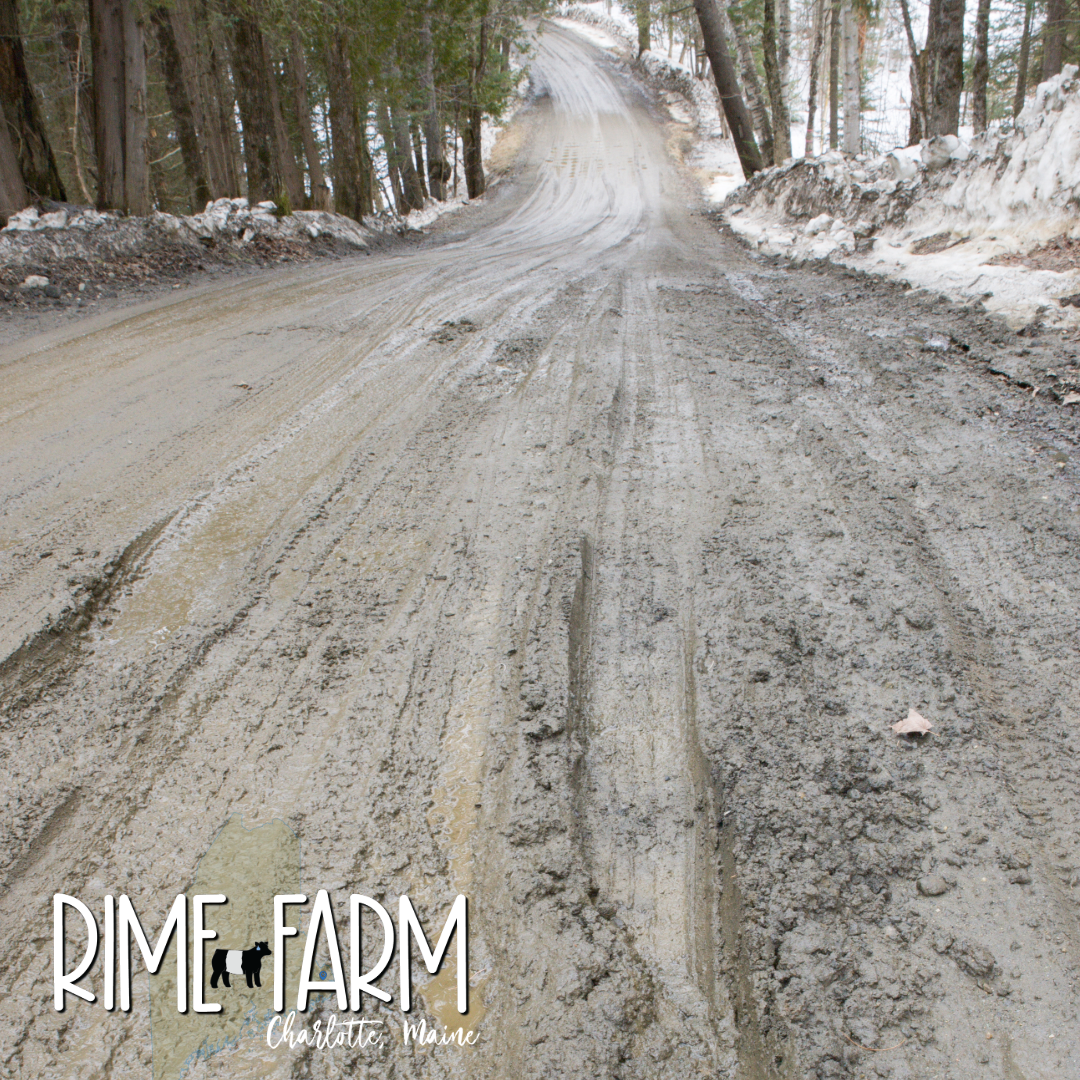
Contrary to popular belief once winter starts loosening its grip on us, the world doesn’t go straight to green pastures and sunny skies. No, that would be too easy—it goes to mud. And for farmers, mud season can be a downright messy, frustrating time.
The freeze-thaw cycle wreaks havoc on dirt roads, pastures, and paddocks. Animals struggle with the slippery, mucky ground, equipment gets stuck or bogged down, and keeping everything clean feels like an impossible task. Here are our best tips for navigating the muck!
Tips for Managing Mud Season
- Protect High-Traffic Areas – Lay down gravel, wood chips, or even old hay in areas where animals congregate, like around feeders, gates, and water troughs. This can reduce the worst of the mud and help keep hooves healthy. My friend, Marcia, uses spent shavings (mixed with hay droppings) from horse stalls to make paths that her horses can travel on. Works awesome.
- Use Space Wisely – Set aside a small area where the animals can escape the mud. If you don’t have a barn, you can still rotate them into smaller paddocks. This gives the land time to dry out and “heal.” It might take some effort, but rotation helps avoid total ground destruction. More importantly, it keeps your animals healthier. On our farm, we use run-ins and shelters with rubber mats covered in pine shavings. When the mud’s knee-deep, these shelters give the animals a dry, comfortable place to rest. The pine shavings absorb moisture and make cleanup easier. They also help prevent hoof issues like thrush. This setup has been a lifesaver during mud season, giving the animals a clean, dry retreat when the rest of the farm turns into a mess.
- Keep Equipment on Solid Ground – Park your tractors, trucks, and other heavy equipment on gravel if possible. If you need to drive across soft ground, plywood sheets or mats can create temporary tracks to prevent sinking.
- Drainage Is Key – Make sure your ditches, culverts, and drains are clear of debris to help channel water away. The quicker you can move standing water, the faster the ground will firm up. We’ve put in some “french drains”. We’ll do a blog on this one day but in the meantime, here’s a great French Drain 101 primer: https://practical.engineering/blog/2024/8/6/how-french-drains-work
- Plan for Extra Cleanup
Mud season means dirt gets everywhere—on boots, in barns, on the animals, in my house (UGH). Stock up on pine shavings or straw for bedding, keep shovels handy for mucking out, and accept that your washing machine’s going to be working overtime for a while.
Spring Dreams Keep Us Going
Mud season’s not glamorous, but it’s part of the process. It’s truly an awkward, uber messy transition between winter and spring. And while it’s frustrating at times, it also signals the start of a new growing season.
So as the cold snap comes this week and we have some more snow, I’m choosing to focus on our 2025 Harvest Season. In just 75 short days, the first green shoots will start breaking through the soil, the trees will bud, and the farm will wake up again.
Stay warm, stay hopeful, and good luck with the mud wherever you are.






Leave a Reply