
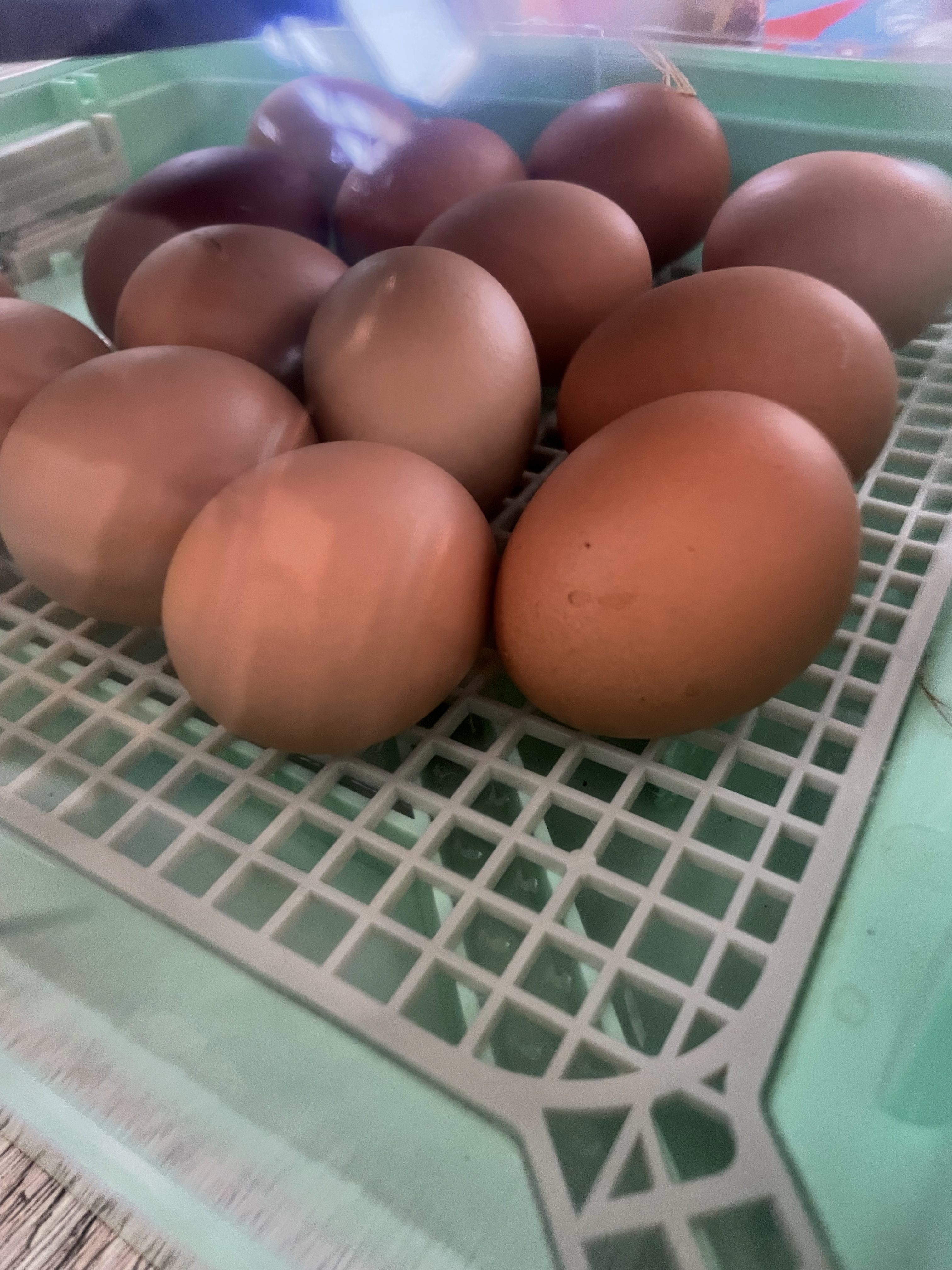
So here we are again, nearing the end of our chicken egg incubation journey. It’s such a thrilling time! Today marks the beginning of the critical “lockdown” period—the last three days when our full attention could make all the difference for our soon-to-be-hatching chicks.
What Exactly is Lockdown?
Lockdown happens from day 18 to day 21. It’s when we stop turning the eggs and fine-tune our incubator’s environment. During this phase, our chicks are gearing up to break out of their shells. Ready to see how we hope to get everything right?
First off, we stop turning the eggs. Up until now, we’ve been turning them regularly to ensure even chick development. But from day 18 on, we disable that feature. This helps the chicks position themselves for their grand entrance. Isn’t it amazing how precise nature is?
Our incubator has these little holders that automatically turn the eggs (pic of the incubator with the turners at bottom of this blog post). We take those out completely during this phase and lay the eggs on the grating like this.

Creating the Perfect Hatching Environment
Here’s what else we focus on during lockdown: humidity, ventilation, temperature, and—perhaps most challenging thing—patience.
You can see the grating but under that (what you can’t see) are channels filled with water. We fill those to to the top to crank up the humidity to between 65% and 75%. This is up from the 45% to 55% eggs need in days 1 through 18. Since it’s currently at a cozy 71%, we’re pretty much on target. Last night we topped off the water to keep it steady. High humidity helps soften the shells, making it easier for the chicks to emerge.
Fresh air is crucial, but too much draft? Not good. Right now, we’re keeping our single air vent half way open in an attempt to strike the perfect balance. Our setup has been working great, so no tweaks needed here just yet.
The incubator temp is locked at 99.5°F. Consistent temperature is non-negotiable for the development of chicks. We make sure to keep the incubator out of direct sunlight and away from drafts. And yes, keeping that lid closed is a must (though it’s tough not to peek!).
The Waiting Game
As the hatch day approaches, we’ll start to notice the eggs wiggling and we may start to hear some faint chirps. These are signs that our chicks are nearly ready to meet us. Patience here is key; hatching is definitely a marathon, not a sprint.
Wrapping It Up
Lockdown is a critical time in the incubation process if you want to be successful. By keeping a vigilant watch and carefully managing the incubator settings, you’re doing all you can to to ensure the most eggs hatch. Stick with us, and in about three days, we’ll hopefully be introducing a vibrant new batch of chicks into our flock. Can’t wait to show you some pictures of them!
Of couple of items you might find helpful. This is the incubator we use. It’s got a good price point and it’s very, very easy to use. We got ours from Amazon.

For this batch, we’re particularly excited. We’re hatching F1 Olive Eggers!
We crossed our purebred Cream Legbar rooster with some ISA Browns and Copper Marans. The resulting cross will give us olive green eggs that will come in different shades of olive green.
This is what a Cream Legbar Rooster looks like:

Cream Legbars are a newer breed. Hens lay a very distinctive pastel-like blue egg. Plus, they have unique autosexing traits. The breed in the early 20th century at the University of Cambridge and was developed by geneticists Reginald Crundall Punnett and Michael Pease. Their main two goals were to create a chicken that could produce colorful eggs and also having the autosexing characteristic. This is where male and female chicks can be distinguished by their feather patterns right after hatching. If you’ve ever tried to sex baby chicks, trust us, it’s really difficult.
To achieve this, they crossed Barred Plymouth Rocks, Leghorns, and Araucanas, which created the blue egg gene. They’re active and inquisitive, they have solid foraging ability, and they’re good layers. They’re becoming a very popular choice for small-scale farmers. We think the roos are particularly striking. They’ve got awesome little crests and plumage!

ISA Browns are a highly regarded but they are a bit more commercial in that they are a hybrid breed. ISAs are known for their super egg-laying capabilities! This breed was developed in France by the Institut de Sélection Animale or (ISA) in the late 20th century. The goal here was maximum egg production. The ISA Brown is a result of breeding from Rhode Island Reds and White Leghorns (among other breeds) to produce hens that can lay a prolific number of eggs reliably.
Our ISAs can produce upwards of 300 to 320 eggs per year! These eggs are medium to large in size and brown. The hens are so docile and they’re easy keepers. Another great trait is that they are robust in our climate–always a good trait.
The Chicks
The resulting F1 Olive Eggers will be a delightful mix of both parents. They should have mixed plumage. There also exists a potential for unique crests. But, its the beautiful olive colored eggs they lay, that we think will make them a solid addition to our flock. This crossbreeding will have hybrid vigor too, so they should be healthier and more robust chickens. We’ll be sure to share them with you in the coming days!





Leave a Reply