
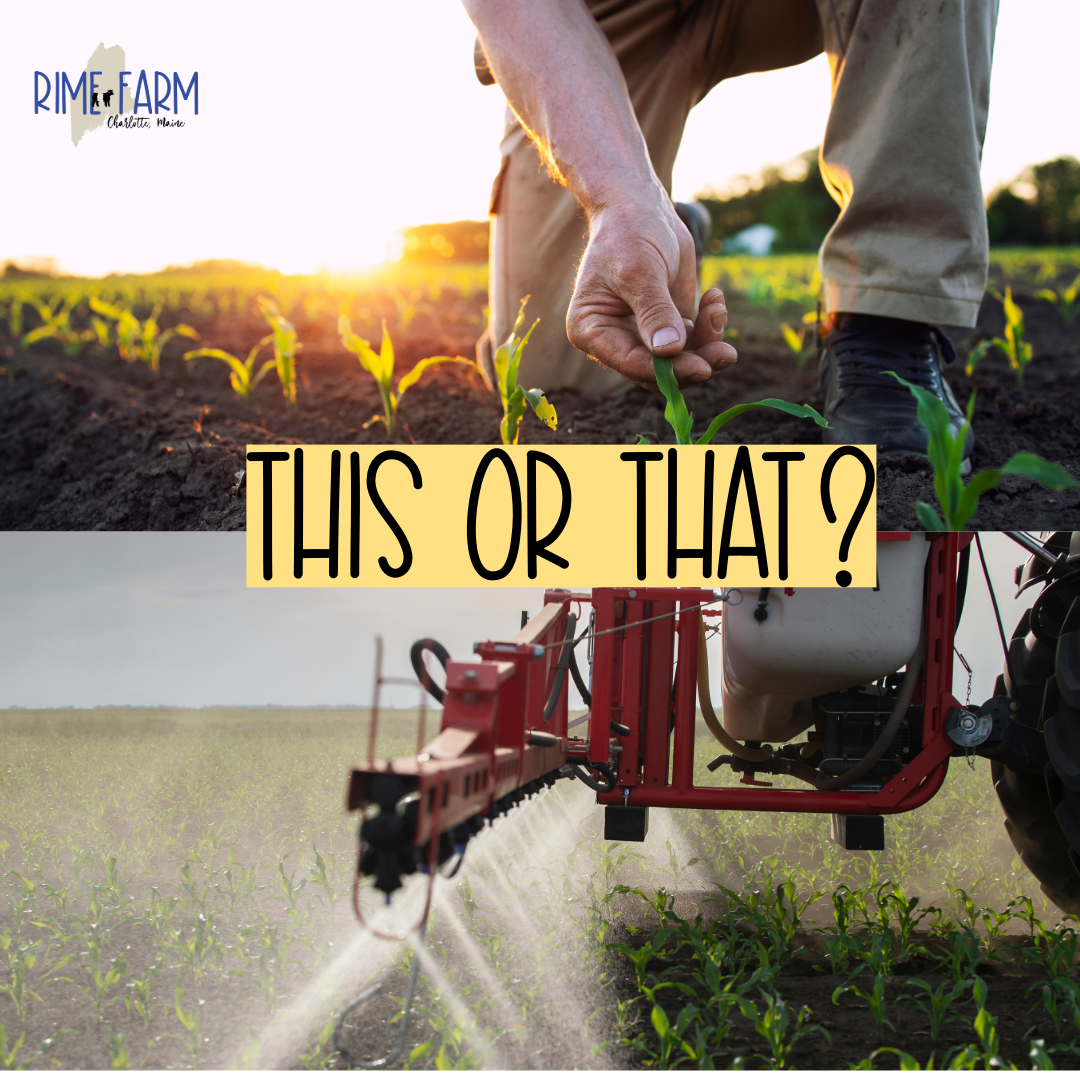
Organic Farming & Pesticides: Understanding the “Dirty Dozen”.
The Environmental Working Group (EWG) annually publishes a list known as the “Dirty Dozen.” This list ranks fruits and vegetables based on the levels of pesticide residues found in them, informing their audience of which produce has the highest concentrations. For consumers who prioritize organic and eco-friendly products, understanding the implications of this list is important. We think it should guide your purchasing decisions and inform where you stand on agricultural practices impacting your health and the environment.
The “Dirty Dozen” is a tool for consumers who are concerned about pesticide exposure to their family and the environment. The list is compiled based on extensive testing of produce for pesticide residues, conducted by federal agencies. The EWG then analyzes these results, ranking fruits and vegetables with the highest pesticide concentrations at the top. This year…strawberries.
The publication of the “Dirty Dozen” list has moved the needle a little to influence consumer behavior. It’s encouraged a shift towards buying more locally grown organic produce. However, some critics, like the blogger “Farm Babe,” argue that the list spreads fear rather than facts, claiming the list is “total bullshit“. Citing the fact that the EWG is funded by the organic industry as one reason that the list should not be taken as canon. There are many other critics who go on to say that the pesticides are easily rinsed off and that they are well below the acceptable EPA/FDA levels. What’s worse, is that critics go on to say that organic farms use equally harmful amendments and pesticides. This is the part that got me riled up this am.

We think this is, at best, a misunderstanding of both the nature and use of pesticides in organic farming and, at worst, just another excuse for big AG to discredit small family farms. Organic pesticides, are derived from natural sources and often processed minimally. They must be approved under stringent regulations that assess their environmental and health impacts. Even then, these naturally occurring substances (not synthetic chemicals) are used only as a last resort since organic farming’s primary focus is on preventive measures to manage pests and diseases.
The majority of small organic farms like Rime, don’t use ANY pesticides beyond diatomaceous earth and Insect Killing Soap. Both completely inert and kill insects mechanically (dehydrates them). 99% of the time, we HAND PICK the bugs off. We can do this without being in the field all day because we select heirloom seed varieties.
Heirloom “old school” varieties are seeds that have been saved and passed down for generations. These seeds are naturally bug resistant–something that big GMO farms with production-focused missions can’t (or won’t) do. We also employ a team of guinea hens and other plants that serve as natural bug repellents. (Catnip works great!)
The Benefits of Organic Farming
Organic farming is more beneficial for the environment and your health. This type of farming reduces dependence on synthetic chemicals. As a result, it minimizes problems like environmental pollution, fertilizer run-off, and promotes biodiversity. The varieties of produce on the “Dirty Dozen” list, when grown organically, don’t carry the same pesticide residues found in their conventionally grown counterparts. This, in turn, assures consumers the produce they are consuming won’t give them cancer over time.
Practical Tips
With all this said, we understand that most people still shop for produce at their local grocer’s. There are solid ways to reduce your risk. Proper washing and preparing techniques will reduce residues on conventional produce. You can also use baking soda in a soak. Research suggests this will remove more pesticide residues than water alone.
Supporting local and sustainable farms is another thing you can do. Farms like ours adhere to organic farming principles. By doing this, you’re partaking in a safe, sustainable agricultural system.
We invite you to explore our range of organic products at Rime Nor Reason Farm and learn firsthand about the benefits of our organic farming practices. Visit us or sign up for our Community Supported Agriculture (CSA) program to experience the freshness and quality of pesticide-free produce.
For more information on the “Dirty Dozen” and the methodology behind it, please visit the EWG site. Please don’t take what big AG says at face value.





Leave a Reply